Edmondson's Move: From Team to Teaming
In April 2012, Harvard Business School professor Amy Edmondson published Teaming: How Organizations Learn, Innovate, and Compete in the Knowledge Economy (Jossey-Bass). The companion piece, "Teamwork on the Fly" appeared in Harvard Business Review the same month. Edmondson made one core argument: in modern work, the dominant unit had shifted from the team-as-stable-noun to the verb.
"Teaming is a verb. It is a dynamic activity, not a bounded, static entity," Edmondson wrote. "Teaming is teamwork on the fly. It involves coordinating and collaborating without the benefit of stable team structures."
The distinction matters because the prior generation of team scholarship, anchored by J. Richard Hackman's Leading Teams (Harvard Business School Press, 2002), defined a "real team" as bounded, stable, and interdependent. Hackman's five conditions for team effectiveness assumed membership stability as a precondition. Edmondson's update accepted that the world had stopped supplying that precondition. Many teams, she observed, "disband almost as soon as they've formed."
Her fix kept teamwork research intact and treated the activity itself as the variable. Teaming, in her formulation, "is largely determined by the mindset and practices of teamwork, not by the design and structures of effective teams." It "still relies upon old-fashioned teamwork skills such as recognizing and clarifying interdependence, establishing trust, and figuring out how to coordinate." But it requires new capabilities on top: developing and using "new capabilities for sharing crucial knowledge quickly" and learning "to ask questions clearly and frequently." The full primary source for these quotes is the HBS Working Knowledge interview, "The Importance of Teaming."
The 2012 HBR article cited two canonical examples. The Beijing Water Cube, built for the 2008 Olympics, was assembled by an international consortium of architects, engineers, and contractors who had never worked together and would never work together again. The 2010 Chilean miner rescue required a fluid coalition of NASA engineers, mining specialists, and Chilean officials. Both succeeded. Both required teaming.
Why 2026 Demands Teaming
The 2012 thesis was prescient. The 2026 environment makes it operational.
In February 2024, Klarna laid off roughly 700 customer service employees and announced its AI assistant was handling 75% of chats, equivalent to 2.3 million conversations. By 2025, Klarna reversed course. CEO Sebastian Siemiatkowski told Fortune the company was pivoting to a hybrid "Uber-style" workforce of human agents. "From a brand perspective, a company perspective, I just think it's so critical that you are clear to your customer that there will always be a human if you want," Siemiatkowski said (Fortune, May 2025). The lesson was about the human layer: it mattered more than the cost-savings model assumed, and Klarna had to reconstruct that layer under pressure after displacing it.
Meanwhile, Cursor, the AI coding tool from Anysphere, crossed $1 billion in annual recurring revenue by November 2025 with roughly 300 employees. CNBC reported a $29.3 billion valuation that month and called Cursor the fastest B2B SaaS company ever to reach $1B ARR. 300 people, $1B run-rate, AI-native product. Per-person leverage at that level requires teaming capability across small, fast, ambiguous units.
The same period saw the largest white-collar contractions in tech history. Amazon announced 14,000 corporate cuts in October 2025, with plans to lower the worker-to-manager ratio by 15% and save roughly $3.5 billion per year (CNBC). Microsoft cut 6,000 jobs in May 2025 and another 9,000 in July, then opened voluntary buyouts to roughly 8,750 employees in April 2026, about 7% of its US workforce. Meta cut 8,000 jobs in April 2026, around 10% of its workforce (Axios). Layoffs.fyi tracked more than 92,000 tech layoffs in 2026 by late April.
At the same time, Amazon, Google, Meta, and Microsoft are collectively spending roughly $650 billion on AI infrastructure in 2026 capex while shrinking headcount. The pattern is clear: capital is moving from bodies to silicon. What survives in the human layer is whatever silicon cannot do alone. Teaming sits firmly inside that frontier, while individual cognitive output is steadily moving out of it.
PwC's 2025 Global Workforce Hopes and Fears Survey, covering 49,843 workers across 48 countries, found that daily GenAI users reported productivity benefit at 92% versus 58% for infrequent users, and job security at 58% versus 36%. The gap implies that GenAI fluency is becoming a baseline condition. The real differentiator is what people do together once the individual cognitive ceiling has lifted. Gartner's October 2025 release on CHRO 2026 priorities named AI transformation and workforce redesign in the human-machine era as the top items.
The Hackman Stability Assumption (and Why It Broke)
Hackman's five conditions, real team, compelling direction, enabling structure, supportive context, and expert coaching, accounted for up to 80% of team effectiveness in the Wageman, Nunes, Burruss, and Hackman 2008 senior team study. The model works. It assumes the wrong starting point for 2026 work.
Mark Mortensen and Heidi Gardner's "The Overcommitted Organization" (HBR, September-October 2017) reported that 81% of more than 500 surveyed managers said multi-teaming was "a way of life." Follow-on HBR research published in 2018 widened the range: "between 81% and 95% of employees around the world actively serve on multiple teams simultaneously." Deloitte's 2025 Global Human Capital Trends report found 71% of respondents calling individual teams and workgroups "very or critically important" as the place to cultivate culture, fluidity, agility, and diversity. The team is still the unit. Team membership is no longer stable.
That is the precise condition Edmondson's framework was designed for. Hackman's model still holds for the small set of bounded long-lived teams that exist. Teaming covers everything else.
The Research Foundation
Teaming sits on top of psychological safety, the construct Edmondson introduced in her 1999 paper "Psychological Safety and Learning Behavior in Work Teams" (Administrative Science Quarterly, Vol 44, No 2, 350-383). The 2017 meta-analysis by Frazier, Fainshmidt, Klinger, Pezeshkan, and Vracheva, published in Personnel Psychology (70(1), 113-165), pooled 136 independent samples covering more than 22,000 individuals and roughly 5,000 groups. The meta-analysis confirmed psychological safety as a meaningful predictor of learning, performance, and information sharing.
Google's Project Aristotle ran from 2012 to 2014 and studied 180 teams, 115 in engineering and 65 in sales (project summary). Of the five team dynamics that distinguished high performers, psychological safety ranked first. The result is widely cited because Google studied its own teams using internal data from real working groups.
Teaming requires psychological safety as a substrate. Coordinating without stable structure means asking unfamiliar people unfamiliar questions in real time. If asking is risky, the structure cannot form. Psychological safety degrades quickly when teams reform, which is exactly when teaming is most needed.
What Teaming Looks Like in Practice
Four cases from the research literature show teaming as built infrastructure: deliberate practices that any organization can engineer.
Pixar dailies and the Braintrust. Ed Catmull's "How Pixar Fosters Collective Creativity" (HBR, September 2008) describes a culture built around two practices: dailies, in which any team member shows in-progress work to the entire animation crew, and the Braintrust, a peer-review group with no authority to mandate changes. The Braintrust's no-authority rule is structural. It removes the political cost of disagreement.
Amazon's six-pagers. Jeff Bezos formalized the six-page narrative memo on June 9, 2004, replacing PowerPoint in senior meetings. Meetings begin with 30 minutes of silent reading, then discussion (CNBC). The format is teaming infrastructure. It forces shared context creation in writing, then open critique on a level playing field, regardless of who is in the room.
Surgical teams adopting new technology. Edmondson, Bohmer, and Pisano studied 16 hospitals adopting minimally invasive cardiac surgery in their 2001 paper "Disrupted Routines: Team Learning and New Technology Implementation in Hospitals" (Administrative Science Quarterly, 46, 685-716). The hospitals that succeeded built teaming practices around the new technology: stable surgical teams that practiced together, surgeons who explicitly invited input from nurses and perfusionists, debriefs after each case. The hospitals that failed treated the technology as a tool for individuals.
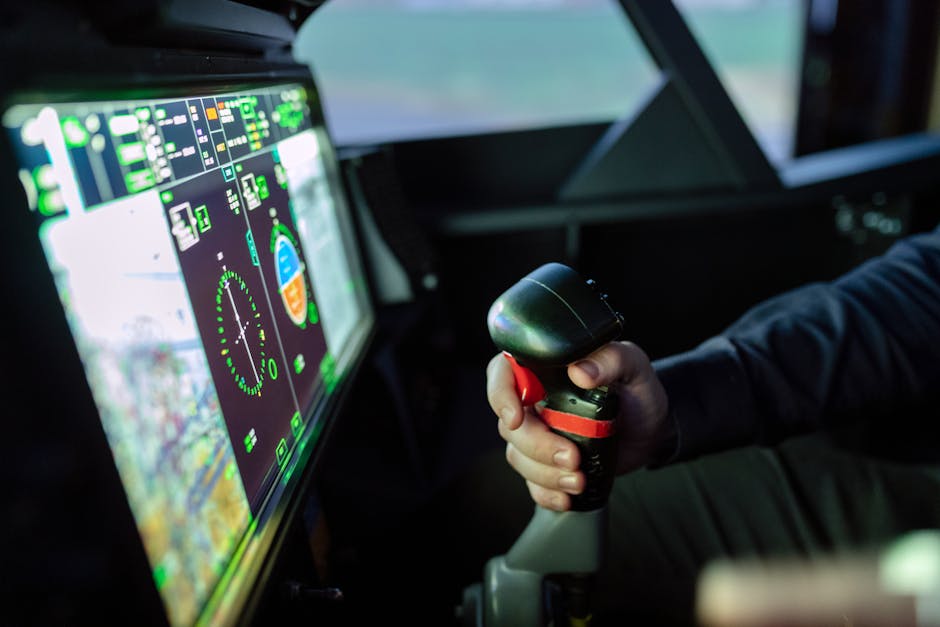
Aviation Crew Resource Management. The 1979 NASA workshop on cockpit resource management followed the Eastern Air Lines 401 crash (1972) and the United Airlines 173 crash (1978). United launched the first comprehensive CRM program in 1981 (FAA history). Before CRM, captain authority was absolute and copilot deference was the norm. After CRM, the cockpit was a teaming environment with explicit speak-up protocols. Aviation safety improved by orders of magnitude. The lesson: teaming capability can be engineered into an industry.
Honest Critiques
The teaming and psychological safety literature has real critics. Three are worth taking seriously.
Construct overlap. The Frazier 2017 meta-analysis itself flagged that psychological safety overlaps heavily with trust, perceived team support, voice climate, and learning climate. Some of what looks like teaming-driven performance may be the same underlying signal measured under different names.
Misuse. Edmondson and Michaela Kerrissey's May 2025 HBR piece, "What People Get Wrong About Psychological Safety," catalogued six common misconceptions. The construct has been conflated with niceness, with getting one's way, with job security, with anti-performance, with policy, and with top-down mandate. "Telling people in a company or on a team that they must have psychological safety 'or else' will not produce it," they wrote. "Psychological safety, rather than being created by a policy, is built in a group, interaction by interaction." That is a self-correction worth noting. The construct is being used to mean things its authors did not intend.
The "last 8%" critique. The Institute for Health and Human Potential argued in a 2025 essay that a safe environment does not automatically produce the courage to surface the hardest 8% of issues. People can feel safe and still not say the thing that matters most. Edmondson's November 2025 follow-up, "In Tough Times, Psychological Safety Is a Requirement, Not a Luxury," partly addresses this by emphasizing that psychological safety is necessary but never sufficient. High standards still have to be set explicitly.
None of these critiques retire teaming as a concept. They specify the conditions under which it works.
The Teaming Premium in 2026
Individual cognitive work is being absorbed by AI at industrial scale. Capital is moving from headcount to compute. Team membership is fluid for 81% to 95% of the workforce. Teaming, the construct that explains how those teams produce results, has 25 years of empirical support behind it through the psychological safety literature. Organizations that build teaming as infrastructure, the way aviation built CRM, will compound. Organizations that treat it as a soft skill will not.
This is the teaming premium. It is the productivity gap between two organizations of the same size, the same AI tooling, and the same talent pool, separated only by their capacity to coordinate under uncertainty. Cursor's 300 people produced $1B in ARR. Klarna's reversal cost market trust and required rebuilding a function it had dismantled. The difference is teaming capability, present or absent, at scale.
What separates high-performing teams from average ones in 2026 is no longer a single skill or a single program. It is the combination of psychological safety as substrate, teaming practice as repeated behavior, and explicit infrastructure that makes both visible.
From Capability to Infrastructure: Team Intelligence
Teaming-as-capability needs a measurement layer to become teaming-as-infrastructure. CRM did not transform aviation by good intentions. It worked because every cockpit had checklists, debrief protocols, simulator hours, and incident-review feedback loops. The capability was made legible at the operational level. The capability was instrumented.
Team Intelligence is the analogous instrumentation for knowledge-work teams. As a category, it sits next to Customer Intelligence and Revenue Intelligence: a data-and-insight layer that turns a fuzzy human capability into something organizations can measure, develop, and improve. Where engagement surveys ask individuals what they feel, Team Intelligence observes what teams do under decision conditions. The unit of analysis is the team. The signal is behavioral. The cadence is weekly. The full case for Team Intelligence as a category covers the parallels in detail.
The QuestWorks Approach
QuestWorks is the Team Intelligence Engine. It runs on its own cinematic, voice-controlled platform and works with Slack as the integration layer. Teams of 2 to 5 enter a 25-minute weekly quest together: a multiplayer scenario built from the same simulation principles that produced CRM in aviation and that decades of research show drive accelerated learning under realistic pressure.
Inside the quest, the team coordinates, decides, recovers from failure, and debriefs. Behavioral signals from the session populate QuestDash, a strengths-based leaderboard with positive callouts visible to everyone on the team. A separate Weekly Team Health Report goes to leaders, summarizing aggregate trends and individual strengths-based highlights. HeroGPT, the Slack-hosted AI coach, runs private one-on-one conversations that never share upstream. The 9 HeroTypes are public profiles teammates can see.
QuestWorks is $20 per user per month with a 14-day free trial. Participation is voluntary and never tied to performance reviews. The brand line, Team Intelligence, Powered by Play, names the method: simulation-grade practice produces the behavioral data that makes teaming visible, and the play context produces the engagement that makes it sustainable.
Edmondson named the verb in 2012. The AI era made it the leverage point. The work now is to instrument it.


 Try it free